

In today's fast-paced business environment, spreadsheet automation is crucial for improving productivity and reducing errors. As data analysts and office workers seek more efficient ways to manage complex tasks, tools like how to use Microsoft Copilot in Excel are becoming essential. Microsoft Copilot, an AI-powered assistant, seamlessly integrates with Excel, offering new ways to streamline workflows and enhance data analysis. This article explores how to leverage Copilot's capabilities within Excel to automate repetitive tasks and unlock deeper insights from your data. By understanding its integration, setup, and best practices, you can significantly boost your efficiency. We'll also compare Copilot with Excel’s native features to help you decide when to use each tool effectively.
Understanding Microsoft Copilot in Excel
Microsoft Copilot in Excel is a powerful AI assistant designed to enhance productivity by automating repetitive tasks and providing data-driven insights. It complements Excel's built-in tools to help users streamline their workflows, making complex data analysis and formatting more efficient.

What Is Microsoft Copilot?
Microsoft Copilot is an AI-powered assistant that leverages advanced machine learning to understand and respond to user commands. It is integrated into the Microsoft 365 ecosystem, allowing users to interact with Excel through natural language prompts. Copilot can assist with tasks such as data cleaning, formatting, and generating insights, making it an invaluable tool for professionals who handle large datasets regularly.
How Copilot Integrates with Excel
Copilot integrates seamlessly with Excel, working alongside its built-in features to automate routine tasks. Users can ask Copilot to perform actions like sorting data, creating formulas, or generating charts by simply typing a query. This integration ensures that Copilot understands the context of the spreadsheet, allowing it to provide accurate and relevant suggestions. By combining Copilot's AI capabilities with Excel's robust data tools, users can significantly reduce the time spent on manual data processing and focus on higher-level analysis.
Setting Up Microsoft Copilot in Excel
Setting up Microsoft Copilot in Excel is the first step to leveraging its AI-powered capabilities for spreadsheet automation. This section outlines the essential steps to ensure Copilot is properly configured and accessible, allowing you to streamline your workflow efficiently.
- Ensure you have the latest version of Excel with Copilot enabled.
- Access Copilot via the 'Insert' tab or the 'Copilot' button in the ribbon.
- Check your subscription to confirm Copilot is available.
Enabling Copilot in Excel
To enable Microsoft Copilot in Excel, start by ensuring you have the latest version of Excel installed. Microsoft regularly updates the application to include new features and improvements, so verifying your version is crucial. If you're using Excel 365 or a newer version, Copilot should already be integrated into the application. If not, you may need to update your software to access the full range of Copilot features.
Checking Your Subscription Status
Before using Copilot, it's important to check your subscription status to confirm that the feature is available. Microsoft Copilot is typically included with certain Office 365 plans, such as the Microsoft 365 Business or Enterprise subscriptions. You can verify your subscription by logging into your Microsoft account and reviewing your plan details. If Copilot is not available, consider upgrading your plan or contacting Microsoft support for assistance.
Using Microsoft Copilot for Spreadsheet Automation
Microsoft Copilot can significantly enhance spreadsheet automation by streamlining data analysis, generating insights, and creating visualizations with minimal manual effort. By leveraging natural language prompts, users can instruct Copilot to perform complex tasks, such as formula creation, trend detection, and data cleaning, making Excel more efficient for business professionals and analysts.

Automating Data Analysis Tasks
Copilot can automate data analysis tasks by interpreting natural language prompts to generate formulas, clean datasets, and identify key patterns. For example, users can ask Copilot to 'summarize sales data by region' or 'calculate the average monthly growth rate.' Copilot can also detect inconsistencies or outliers in data, helping users refine their datasets before further analysis. This capability reduces the time spent on repetitive tasks, allowing analysts to focus on interpreting results rather than data preparation.
Generating Visualizations and Reports
Generating visualizations and reports is another powerful use case for Copilot in Excel. Users can ask Copilot to 'create a bar chart showing quarterly sales performance' or 'generate a report summarizing customer demographics.' Copilot can also suggest appropriate chart types based on the data, such as line charts for time-series data or pie charts for categorical distributions. These visualizations can be further customized using Excel's built-in tools like Conditional Formatting or Pivot Tables, enhancing the clarity and impact of the insights presented.
Best Practices for Using Microsoft Copilot in Excel
To maximize the efficiency and accuracy of Microsoft Copilot in Excel, it's essential to follow best practices that ensure your prompts are clear and your results are reliable. By combining Copilot with Excel's native tools and carefully reviewing its suggestions, you can enhance your workflow without compromising data integrity.
- Use clear and concise prompts for better results.
- Combine Copilot with Excel's built-in functions for more accurate outputs.
- Review Cop,ilot suggestions to ensure they align with your data needs.
Crafting Effective Prompts
Crafting effective prompts is crucial for getting accurate and relevant responses from Copilot. Instead of vague instructions like 'analyze this data,' specify what you need, such as 'summarize the sales trends for Q1 2024.' Providing context, such as the data range or specific metrics, helps Copilot understand your requirements more precisely. Clear prompts also reduce the likelihood of errors and ensure that the output matches your intended goals.
Validating Copilot Suggestions
Validating Copilot suggestions is an essential step in ensuring the reliability of your results. Always double-check the output against your data to confirm that it aligns with your expectations. If Copilot generates a formula or visualization, verify that it accurately reflects the data and meets your analytical needs. This validation process helps prevent errors and ensures that your automated tasks are both efficient and trustworthy.
Comparing Microsoft Copilot with Excel's Built-In Features
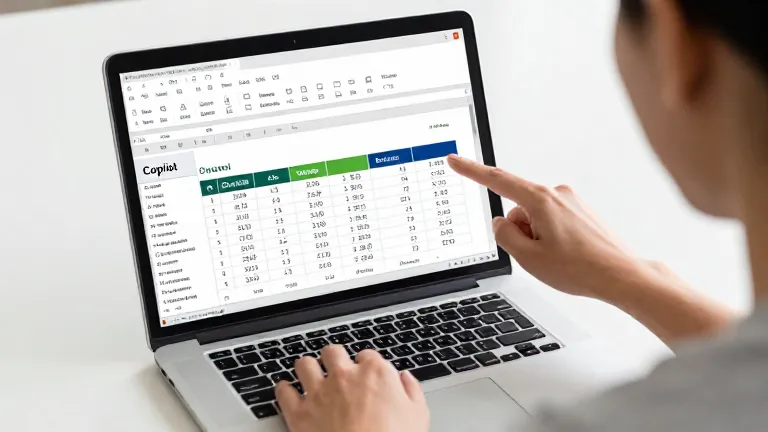
Microsoft Copilot and Excel's built-in features serve different but complementary roles in data analysis. While Excel provides powerful formulas and functions for precise control over data manipulation, Copilot introduces AI-driven automation and insights that can enhance efficiency and reduce manual effort.
When to Use Copilot vs Excel Functions
Use Copilot for tasks that require pattern recognition, natural language input, or generating complex reports without writing code. For example, Copilot can suggest formulas or create charts based on simple text prompts. Excel functions, on the other hand, are ideal for tasks that demand exact calculations, such as financial modeling or statistical analysis where precision is critical. When repetitive or time-consuming tasks are involved, Copilot can automate much of the work, while Excel functions remain indispensable for detailed, manual data adjustments.
Advantages of Using Both Together
Combining Copilot with Excel functions can lead to more efficient and accurate results by leveraging the strengths of both tools. Copilot can handle high-level tasks like generating insights or formatting data, while Excel functions ensure the underlying calculations are accurate and reliable. This synergy allows users to focus on strategic decision-making rather than manual data processing. By using Copilot for automation and Excel for precise control, professionals can streamline workflows and improve overall productivity in data-driven tasks.
Frequently Asked Questions
Can Microsoft Copilot replace Excel formulas?
Microsoft Copilot can assist with complex data analysis tasks, but it does not replace Excel formulas. While Copilot can generate formulas based on prompts, users should validate its suggestions for accuracy and reliability.
How accurate are Copilot's suggestions in Excel?
Copilot's suggestions are generally accurate, but they depend on the quality of the input and the context provided. Users should review and verify suggestions to ensure they meet specific requirements.
Is there a cost to use Microsoft Copilot in Excel?
Microsoft Copilot is included with certain Microsoft 365 subscriptions. Users should check their subscription details to confirm if Copilot is available and if there are any associated costs.
What are the limitations of using Copilot in Excel?
Copilot may struggle with highly specific or niche tasks and may not replace advanced Excel functions. It also requires a stable internet connection and may not be suitable for all data environments.
Final Thoughts
Microsoft Copilot enhances Excel's capabilities by automating repetitive tasks and generating insights. However, it complements, rather than replaces, traditional Excel functions. To maximize efficiency, users should combine Copilot with their knowledge of Excel.
Start by enabling Copilot in Excel and experimenting with its features. Practice crafting clear prompts to get the most accurate results. As you become more familiar, you'll be able to leverage Copilot effectively for spreadsheet automation.