

In today’s fast-paced professional environment, staying ahead requires more than just expertise—it demands efficiency, precision, and the ability to process vast amounts of data quickly. As professionals in marketing, business analysis, data science, and content creation face increasingly complex challenges, the best AI research tools for professionals are becoming essential for streamlining workflows and enhancing decision-making. These tools offer advanced capabilities that automate data analysis, extract insights, and optimize research processes, allowing professionals to focus on strategic outcomes rather than manual tasks. This article explores why AI research tools are critical, highlights the top platforms available in 2024, and guides you on selecting and integrating the right tools for your specific needs.
Why AI Research Tools Are Essential for Modern Professionals
AI research tools have become indispensable for professionals across industries, offering powerful solutions to complex challenges in data analysis, automation, and decision-making. As the demand for efficiency and accuracy grows, these tools provide a strategic advantage by streamlining workflows and enabling smarter insights.

The Evolution of AI in Research Workflows
The integration of AI into research workflows has transformed how professionals handle data and tasks. Initially, AI was used primarily for basic automation, but today it plays a critical role in processing large datasets, identifying patterns, and predicting outcomes. This evolution has allowed professionals to shift focus from manual analysis to higher-level strategy, leveraging AI’s ability to process information at scale.
Key Benefits of AI Research Tools for Professionals
AI research tools offer professionals a range of benefits that enhance productivity and decision-making. By automating repetitive tasks such as data entry, filtering, and preliminary analysis, these tools free up time for more strategic work. Additionally, they support data-driven decision-making by delivering accurate insights and visualizations, enabling professionals to make informed choices. Many of these tools also integrate seamlessly with existing workflows, ensuring compatibility with current systems and enhancing overall efficiency.
Top AI Research Tools for Professionals in 2024
Selecting the best AI research tools for professionals requires careful evaluation of features such as ease of use, integration capabilities, and scalability. Professionals in marketing, business analysis, data science, and content creation should prioritize tools that support data analysis, content generation, and workflow automation, while also offering real-time insights and customizable reporting. The right choice depends on your team size, project complexity, and specific research goals.
| Tool | Ease of Use | Integration | Scalability | Data Analysis | Content Generation | Workflow Automation | Real-Time Insights | Customizable Reporting |
|---|---|---|---|---|---|---|---|---|
| Jupyter Notebook | High | Medium | High | High | Low | Moderate | High | High |
| Tableau | High | High | High | High | Low | High | High | High |
| Google Colab | High | High | Moderate | High | Low | Moderate | High | High |
| IBM Watson Studio | Moderate | High | High | High | High | High | High | High |
| Microsoft Power BI | High | High | High | High | Low | High | High | High |
Best AI Research Tools for Professionals
The best AI research tools for professionals offer a balance between advanced functionality and user-friendly design. Jupyter Notebook stands out for its versatility in data analysis and coding, making it ideal for data scientists and researchers. Tableau, on the other hand, excels in data visualization and integration with multiple data sources, making it a top choice for business analysts. Google Colab provides cloud-based computing power, enabling seamless collaboration and scalability for teams working on complex projects.
Comparing AI Research Platforms
When comparing AI research platforms, the ability to integrate with existing workflows and scale with project demands is crucial. Tools like IBM Watson Studio and Microsoft Power BI offer robust integration options and can handle large-scale data processing, making them suitable for enterprise-level teams. Real-time insights and customizable reporting are essential for professionals who need to present findings quickly and accurately. Choosing a tool that aligns with your team's size and project complexity ensures efficient workflow automation and accurate data analysis.
How to Select the Right AI Research Tool for Your Workflow
Selecting the right AI research tool requires a clear understanding of your workflow and objectives. Professionals must align tool capabilities with their specific needs to maximize efficiency and outcomes.

Defining Your Research Objectives
Before exploring AI research tools, define your specific research goals and workflow needs. Determine whether you require automation for data analysis, content creation, or strategic insights. Identify the volume and type of data you handle, as well as the desired output format. This clarity ensures that you select a tool capable of addressing your unique challenges and enhancing productivity.
Evaluating Tool Performance and Integration
Evaluate tool performance and integration with your existing software and data sources. Ensure the AI tool can seamlessly connect with your current platforms, such as databases, analytics software, or collaboration tools. Test its compatibility with your data formats and workflows to avoid disruptions. Additionally, consider user reviews and case studies to gauge real-world effectiveness and reliability.
Using AI Research Tools to Automate and Optimize Your Workflow
AI research tools can significantly streamline your workflow by automating repetitive tasks and providing actionable insights. By leveraging these tools, professionals can focus on strategic decision-making rather than manual data processing, leading to increased efficiency and productivity.
- Automate data collection and analysis to reduce manual effort.
- Use AI to generate summaries, identify patterns, and highlight key findings.
- Integrate tools with your project management or communication platforms.
- Track progress and refine workflows based on AI insights.
Automating Data Analysis with AI
Automating data analysis with AI involves using advanced algorithms to process large datasets quickly and accurately. These tools can detect trends, anomalies, and correlations that would take significant time to uncover manually. By automating this process, professionals can save hours each week while ensuring their analysis remains thorough and up-to-date.
AI-driven data analysis also supports real-time insights, allowing teams to respond swiftly to changing conditions. For example, in marketing, AI tools can analyze customer behavior data as it streams in, providing immediate recommendations for campaign adjustments. This level of responsiveness is critical in fast-paced industries where timely decisions make a difference.
Integrating AI Tools Into Your Workflow
Integrating AI tools into your workflow requires seamless compatibility with existing platforms and systems. Most modern AI research tools offer APIs or plugins that connect with project management software like Trello, Asana, or Monday.com, ensuring that insights are shared across teams without manual data transfer.
These integrations also enable automation of reporting and task assignments. For instance, once an AI tool identifies a key finding, it can automatically update a project management dashboard or trigger a notification to the relevant team member. This reduces the need for manual follow-ups and keeps everyone aligned with the latest data.
Real-World Applications of AI Research Tools for Professionals
AI research tools are transforming how professionals across industries approach their work, offering practical solutions that enhance efficiency and decision-making. From marketing to business strategy, these tools are being used to unlock insights, automate tasks, and drive innovation. This section explores how AI is applied in real-world scenarios to improve outcomes in marketing, content creation, data analysis, and strategic planning.
AI Research in Marketing and Content Creation
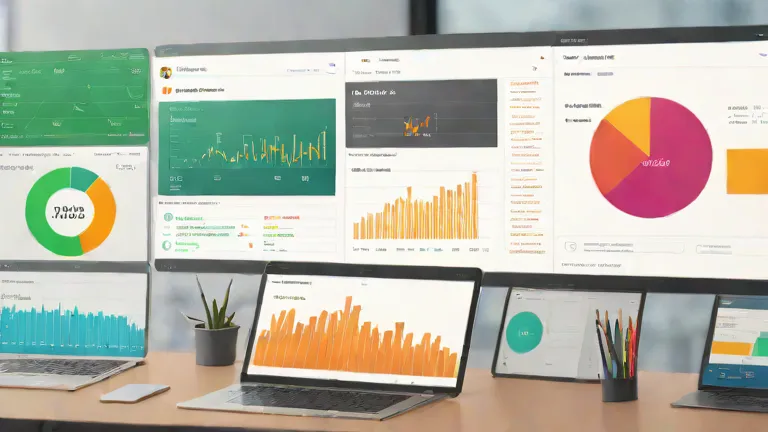
Marketing professionals rely on AI research tools to analyze customer behavior, track engagement patterns, and optimize campaign performance. These tools help identify trends in consumer preferences, enabling brands to tailor their messaging and improve conversion rates. Content creators, in turn, use AI to discover trending topics, analyze competitor strategies, and refine SEO tactics to boost visibility and reach. By integrating AI into their workflows, marketers and content creators can make data-driven decisions that align with audience expectations and market demands.
AI Tools for Data Analysis and Business Strategy
For business analysts and researchers, AI tools provide powerful capabilities to process large datasets, uncover hidden patterns, and generate comprehensive reports in less time. These platforms automate complex analytical tasks, such as predictive modeling and sentiment analysis, allowing professionals to focus on interpreting results and making strategic recommendations. By leveraging AI for data analysis, organizations can make faster, more informed decisions that support long-term growth and competitive advantage. The integration of AI into research workflows is reshaping how professionals approach problem-solving and innovation across industries.
Frequently Asked Questions
How can I integrate AI research tools with my existing project management software?
Most AI research tools offer APIs or integrations with popular project management platforms like Jira, Trello, or Asana. Check the tool's documentation for compatibility and follow the setup steps to connect your workflows seamlessly.
What are the key differences between Perplexity and Gemini for research?
Perplexity focuses on real-time data and contextual understanding, while Gemini excels in complex reasoning and multilingual support. Choose based on whether you prioritize speed or depth in your research.
Can AI research tools help with data visualization and reporting?
Yes, many AI research tools include built-in data visualization and reporting features. These tools can generate charts, graphs, and summaries, making it easier to present findings in a clear and actionable format.
Are there any AI research tools that work well with non-technical teams?
Tools like Jasper and Hemingway Editor are designed for non-technical users, offering intuitive interfaces and minimal setup. They enable collaboration by simplifying complex tasks and providing clear guidance for all team members.
Final Thoughts
Selecting the right AI research tool depends on your specific needs and workflow. Prioritize tools that align with your goals and offer seamless integration with your existing systems.
Start by defining your research objectives and evaluating the features that matter most. With the right tool, you can enhance efficiency, accuracy, and collaboration in your work.