

AI software development is transforming how developers build intelligent applications, offering new ways to enhance functionality and efficiency. As the demand for AI-driven solutions grows, developers must stay informed about the latest tools and trends to remain competitive. Integrating AI into software requires a deep understanding of both the technology and its broader implications. This article explores the fundamentals of AI software development, highlighting key components and emerging trends that shape the field today. Whether you're a seasoned engineer or just starting out, understanding these concepts is essential for building robust AI systems. We also examine the tools and best practices that can help you navigate the complexities of AI development with confidence. Finally, we look ahead to the future of AI software development, discussing how it will evolve and become more accessible to all developers.
Understanding AI Software Development
AI software development is the process of creating applications that can perform tasks typically requiring human intelligence. This field merges traditional software development practices with advanced AI techniques to build systems capable of learning, adapting, and making autonomous decisions. By integrating machine learning, natural language processing, and other AI technologies, developers can enhance the functionality and efficiency of their applications.

What Is AI Software Development?
AI software development involves the creation of applications that can perform tasks requiring human intelligence such as problem-solving, decision-making, and pattern recognition. Unlike traditional software, which follows predefined rules, AI software learns from data and improves over time. This evolution allows systems to become more accurate and efficient without explicit programming for every scenario.
Key Components of AI Software Development
The key components of AI software development include data collection, model training, and system integration. Developers rely on large datasets to train machine learning models, which form the foundation of AI applications. These models are then integrated into software systems, enabling them to process information, make predictions, and execute tasks autonomously. Additionally, AI systems often require continuous monitoring and refinement to maintain performance and adapt to new data.
Trends in AI Software Development
The AI software development landscape is evolving rapidly, driven by the need for more efficient, scalable, and secure solutions. As organizations seek to integrate AI into their operations, new trends are shaping the way developers approach AI implementation, from infrastructure to ethical considerations.
Emerging Trends in AI Development
AI development is increasingly focused on modular, scalable, and cloud-native solutions. Developers are prioritizing architectures that allow for easy integration, maintenance, and expansion. Cloud platforms are playing a key role in this shift, offering scalable compute resources and AI-specific tools that reduce development time and complexity. These approaches enable teams to deploy AI models quickly and efficiently, adapting to changing business needs without significant overhauls.
Ethical Considerations in AI Software Development
Integration of AI with existing systems is becoming a priority for many organizations. Companies are looking to enhance their legacy systems with AI capabilities to improve performance, automate workflows, and extract insights from historical data. This integration requires careful planning to ensure compatibility and seamless operation. Tools and frameworks that support hybrid environments are gaining popularity, helping developers bridge the gap between traditional systems and AI-driven innovations.
There is a growing emphasis on ethical AI development and responsible innovation. As AI becomes more pervasive, developers and organizations are under increasing pressure to ensure transparency, fairness, and accountability in their models. Ethical considerations include data privacy, bias mitigation, and the potential societal impact of AI applications. Developers are now expected to implement robust testing, documentation, and governance frameworks to align AI systems with ethical standards and regulatory requirements.
Essential Tools for AI Software Development
Choosing the right tools is critical for successful AI software development. Developers rely on a combination of frameworks, cloud platforms, and data processing tools to build, train, and deploy AI models efficiently.

- TensorFlow and PyTorch are leading AI development frameworks that provide flexible and scalable environments for building machine learning models.
- Cloud platforms like AWS and Azure offer AI-specific services such as pre-built machine learning models, data storage, and compute resources.
- Data processing tools like Apache Spark and Pandas help developers clean, analyze, and prepare data for AI model training.
- Integration tools like Docker and Kubernetes enable seamless deployment and scaling of AI applications across different environments.
AI Development Frameworks
AI development frameworks such as TensorFlow and PyTorch are essential for building and training machine learning models. These frameworks provide high-level APIs, computational graphs, and optimized libraries that simplify complex tasks like neural network design and model optimization. TensorFlow is known for its flexibility and scalability, making it ideal for large-scale applications, while PyTorch offers dynamic computation graphs and is popular for research and rapid prototyping.
Cloud Platforms for AI Development
Cloud platforms like AWS and Azure provide developers with AI-specific tools and services that streamline the development and deployment of intelligent applications. AWS offers services like SageMaker for model training and deployment, while Azure provides tools like Machine Learning Studio and Cognitive Services for building AI-powered applications. These platforms also offer managed compute resources, data storage, and machine learning APIs, reducing the need for extensive infrastructure setup.
Best Practices for AI Software Development
Best practices in AI software development are essential to build reliable, ethical, and efficient systems. Developers must prioritize data quality, model transparency, and collaboration to ensure that AI applications function effectively and meet user needs.
Data Quality and Model Transparency
Data quality is the foundation of any AI system. Poor data can lead to biased or inaccurate models, which can undermine the reliability of the application. Developers should ensure that training data is representative, diverse, and free from errors. Model transparency is equally important; developers should document model decisions and provide explanations where necessary to build trust with users and stakeholders.
Collaboration and Testing in AI Development
Collaboration between data scientists and software engineers is critical for successful AI integration. Data scientists focus on model development and performance, while software engineers handle deployment and system integration. This synergy ensures that AI solutions are not only technically sound but also aligned with business goals. Testing and validation are essential to identify and mitigate biases, ensuring that models perform consistently across different scenarios. Rigorous testing helps improve model performance and ensures that AI systems remain robust and reliable in real-world applications.
Future of AI Software Development
The future of AI software development is set to transform how applications are built and maintained. As AI systems become more self-sufficient, developers will increasingly rely on automation and self-learning models to streamline workflows and reduce manual intervention. This shift will not only enhance efficiency but also open new possibilities for innovation across industries.
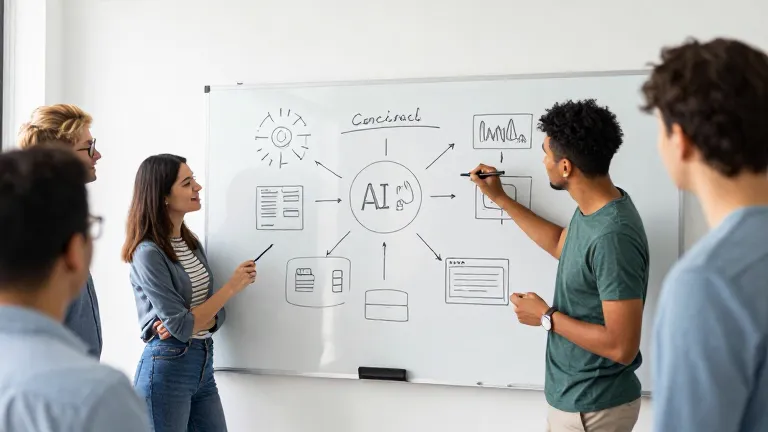
What to Expect in AI Development
Self-learning systems are expected to play a central role in the next phase of AI development. These systems will be capable of adapting to new data and environments without explicit programming, reducing the need for constant human oversight. As a result, developers will need to focus more on designing robust architectures and integrating AI capabilities rather than managing every detail of model behavior. This evolution will also create new challenges, such as ensuring model reliability and addressing potential biases in autonomous decision-making.
Making AI Accessible for All Developers
The growing emphasis on accessibility is reshaping the AI development landscape. No-code and low-code platforms are making it possible for developers with limited machine learning expertise to build and deploy AI-driven applications. These tools abstract complex processes, allowing users to leverage AI without deep technical knowledge. While this trend democratizes AI development, it also raises questions about the balance between ease of use and the quality of outcomes. Developers must remain aware of the limitations of these platforms and ensure that AI systems are still built with precision and responsibility.
Frequently Asked Questions
What are the best AI development tools for beginners?
Beginners should start with user-friendly tools like TensorFlow Lite or Google Colab. These tools offer pre-built models and simplified interfaces that make it easier to experiment with AI concepts without requiring deep technical expertise.
How can I integrate AI into my existing software applications?
Integrating AI into existing applications can be done using APIs from platforms like AWS or Azure. These services allow developers to add machine learning capabilities without rewriting the entire codebase.
What are the ethical considerations in AI development?
Ethical considerations in AI development include ensuring transparency, fairness, and accountability. Developers should be aware of biases in data and models and consider the societal impact of their AI systems.
Are there no-code or low-code AI development platforms available?
Yes, platforms like Microsoft Power BI and Google AutoML offer no-code or low-code AI development options. These tools help developers with minimal coding experience build and deploy AI models.
Next Steps in AI Development
AI software development is evolving rapidly, with new frameworks and tools making it more accessible and efficient. Developers should stay updated on trends and best practices to leverage AI effectively.
To get started, explore beginner-friendly tools and consider integrating AI into existing projects. Embracing ethical development and collaboration will help you build robust and responsible AI solutions.