

In today’s fast-paced business environment, making data-driven decisions can mean the difference between success and stagnation. Small business owners, marketing professionals, and office workers are increasingly turning to ai tools for business analytics and insights to automate data processing, uncover hidden trends, and improve operational efficiency. These tools leverage artificial intelligence to transform raw data into actionable intelligence, empowering teams to make smarter, faster decisions. As the demand for real-time insights grows, understanding the right AI solutions can provide a competitive edge. This guide explores the role of AI in business analytics, highlights top tools for data visualization and predictive analytics, and offers practical advice on selecting and implementing the best solutions for your needs.
Understanding AI Business Analytics and Insights
AI business analytics refers to the use of artificial intelligence to analyze business data and generate actionable insights. By leveraging machine learning and advanced algorithms, these tools transform raw data into meaningful information that supports strategic decision-making. As businesses face increasing data complexity, AI-driven analytics offers a powerful way to uncover trends, optimize operations, and drive growth.
What Is AI Business Analytics?
AI business analytics involves the application of machine learning and data science to process vast amounts of structured and unstructured data. These systems can identify patterns, correlations, and anomalies that would be difficult for humans to detect manually. By automating data analysis, AI reduces the time required to derive insights, enabling businesses to respond quickly to market changes and customer demands.
The Role of AI in Business Decision-Making
In business decision-making, AI provides real-time insights that empower leaders to make informed choices. These insights help in forecasting trends, assessing risks, and identifying opportunities for innovation. By integrating AI into analytics workflows, organizations can improve accuracy, reduce biases, and enhance overall operational efficiency. The ability to process and interpret large datasets in real-time makes AI an essential tool for modern business strategy.
Top AI Tools for Business Analytics and Insights
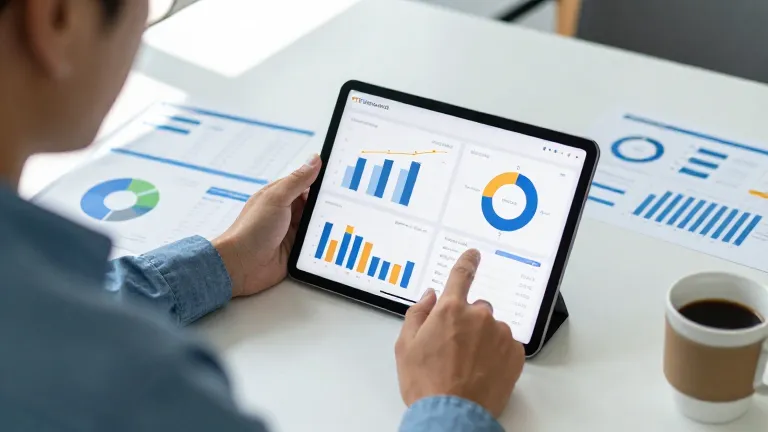
Selecting the right AI tools for business analytics and insights is crucial for streamlining operations and making data-driven decisions. This section explores some of the top AI tools in the market, comparing their features, ease of use, and integration capabilities to help you find the best fit for your business size and industry needs.
| Tool | Features | Ease of Use | Integration | Decision Support | Best For |
|---|---|---|---|---|---|
| Tableau | Advanced data visualization, collaboration tools, AI-powered insights | Moderate | Supports multiple data sources | High | Large enterprises with complex data needs |
| Power BI | Interactive dashboards, AI-driven forecasts, real-time analytics | High | Seamlessly integrates with Microsoft products | High | Small to medium businesses using Microsoft ecosystem |
| Google Data Studio | Customizable reports, integration with Google Workspace | High | Works well with Google Sheets and Analytics | Moderate | Small businesses and startups |
| SAS Visual Analytics | Predictive modeling, drag-and-drop interface | Moderate | Supports integration with enterprise systems | High | Large organizations with advanced analytics needs |
AI Tools for Data Visualization and Reporting
AI tools for data visualization and reporting are essential for transforming raw data into actionable insights. Tableau and Power BI stand out for their user-friendly interfaces and robust visualization capabilities. Tableau excels in handling large datasets and providing deep analytical insights, while Power BI integrates smoothly with Microsoft products, making it ideal for businesses already invested in the Microsoft ecosystem. Both tools offer real-time analytics and support decision-making through interactive dashboards, making them valuable for businesses looking to enhance their reporting processes.
AI Tools for Predictive Analytics and Forecasting
Predictive analytics and forecasting tools help businesses anticipate trends and make informed decisions. SAS Visual Analytics is a top choice for enterprises requiring advanced predictive modeling and integration with existing systems. It offers a drag-and-drop interface that simplifies complex data analysis, making it accessible to non-technical users. Google Data Studio, while more suited for smaller businesses, provides a user-friendly way to integrate data from Google Workspace, offering basic predictive features that can support strategic planning. Choosing the right tool depends on your business size, data complexity, and the level of automation required to drive efficiency and growth.
Key Features to Look for in AI Business Analytics Tools
When selecting AI tools for business analytics and insights, it's crucial to prioritize features that enhance efficiency, accuracy, and adaptability. The right tools should seamlessly handle complex data workflows while delivering actionable insights in a timely manner. Look for solutions that offer robust integration capabilities, intuitive interfaces, and the flexibility to scale with your business growth.
Data Integration and Real-Time Analytics
Data integration and real-time analytics are foundational to effective AI business analytics. A strong tool should support seamless connectivity with multiple data sources, including databases, spreadsheets, and cloud platforms, ensuring that all relevant information is consolidated for analysis. Real-time analytics capabilities allow businesses to monitor performance metrics and market trends as they happen, enabling quicker and more informed decision-making.
Customizable Dashboards and User Experience
Customizable dashboards and user-friendly interfaces are essential for maximizing the utility of AI analytics tools. A good platform should allow users to tailor dashboards to their specific needs, displaying key performance indicators (KPIs) and data visualizations that are most relevant to their roles. An intuitive interface reduces the learning curve and ensures that even non-technical users can access and interpret insights without requiring extensive training.
How to Choose the Right AI Tool for Your Business
Selecting the right AI analytics tool requires a strategic approach that aligns with your business goals, operational scale, and resource availability. A well-structured evaluation process ensures that you choose a tool that not only meets your current needs but also supports future growth and innovation.

- Define your business objectives and data requirements
- Compare cost structures and scalability
- Assess user experience and learning curve
- Evaluate support options and integration capabilities
Evaluating AI Tools for Your Business Needs
Begin by identifying your core business objectives and the type of data you need to analyze. This will help narrow down the features and capabilities that are most relevant to your operations. Consider whether the tool can handle real-time analytics, predictive modeling, or automated reporting, depending on your specific needs.
Testing and Implementing AI Analytics Tools
Once you have a clear understanding of your requirements, compare the cost structures of different tools. Look for options that offer flexibility in pricing models, such as pay-per-use, subscription-based, or tiered plans. Additionally, consider the scalability of the tool to ensure it can grow with your business. A tool that is too expensive or inflexible may not be the best fit for your long-term strategy.
Practical Use Cases and Real-World Applications
AI tools are transforming how businesses approach marketing, sales, operations, and customer service by delivering actionable insights that drive efficiency and growth. From automating lead scoring to optimizing supply chains, these tools help organizations make smarter decisions with less effort. Integrating AI into existing workflows can be seamless with the right approach, ensuring minimal disruption while maximizing value.

AI Analytics in Marketing and Sales
In marketing and sales, AI tools analyze customer behavior and preferences to create highly targeted campaigns. For instance, an e-commerce company might use AI to predict which products a customer is likely to purchase, enabling personalized recommendations that boost conversion rates. These tools also help track campaign performance in real time, allowing marketers to adjust strategies quickly based on data-driven insights.
AI Tools for Operational Efficiency
Operational efficiency gains are equally significant. AI-powered tools can automate repetitive tasks such as inventory management, scheduling, and logistics planning. A manufacturing firm, for example, might use AI to forecast demand and optimize production schedules, reducing waste and improving delivery times. When integrating these tools, it's essential to start with small-scale pilots, train teams on new processes, and ensure compatibility with existing systems to avoid disruptions.
Frequently Asked Questions
What are the best AI tools for small businesses?
Small businesses can benefit from AI tools like Power BI and Tableau for data visualization, and Google Analytics for tracking website performance. These tools offer user-friendly interfaces and scalable features that support growth without requiring extensive technical expertise.
How do AI analytics tools improve business efficiency?
AI analytics tools automate data processing, identify patterns, and generate insights, reducing manual effort. They enable real-time decision-making and streamline workflows, allowing teams to focus on strategic tasks rather than data management.
Can AI tools help with forecasting sales trends?
Yes, AI tools use historical data and predictive algorithms to forecast sales trends, helping businesses anticipate demand and plan inventory and marketing strategies more effectively.
Are there free AI analytics tools available for businesses?
Several free AI analytics tools, such as Google Analytics and Microsoft Power BI, offer robust features for data analysis and visualization. These tools provide a solid foundation for small and mid-sized businesses looking to leverage AI without significant upfront costs.
Next Steps for Business Growth
Selecting the right AI tools can transform how businesses analyze data and make decisions. Prioritize tools that align with your specific needs, offer scalability, and integrate seamlessly with your existing systems.
To start, evaluate your business requirements and test a few tools before implementation. Embrace AI analytics to unlock insights, enhance efficiency, and drive growth.