
For small and medium businesses, managing customer relationships can be a complex and time-consuming task. As customer expectations rise and competition grows, traditional CRM methods are often insufficient to keep up with the demand for personalized, efficient service. AI tools for customer relationship management are changing the game by offering smarter, data-driven solutions that automate repetitive tasks, analyze customer behavior, and improve engagement. These tools empower businesses to deliver more tailored experiences, boost retention, and ultimately drive growth. In this article, we explore the role of AI in modern CRM, highlight the top AI-powered CRM tools, and guide you in selecting the right solution for your business needs.
Introduction to AI in Customer Relationship Management
Artificial Intelligence (AI) is revolutionizing Customer Relationship Management (CRM) by streamlining operations, enhancing data-driven decision-making, and delivering more personalized customer experiences. As businesses seek to optimize their interactions with customers, AI-powered CRM tools are becoming essential for improving efficiency, reducing manual workloads, and fostering stronger customer relationships.
The Role of AI in Modern CRM
AI is transforming CRM by automating routine tasks such as data entry, lead scoring, and follow-up emails, allowing teams to focus on more strategic activities. These tools leverage machine learning algorithms to analyze vast amounts of customer data, identify patterns, and offer actionable insights that help businesses anticipate customer needs and preferences. The integration of AI into CRM systems also enables real-time personalization, ensuring that customer interactions are tailored to individual behaviors and preferences.
Why Businesses Are Adopting AI in CRM
Businesses are increasingly adopting AI in CRM to stay competitive in a rapidly evolving market. AI-driven CRM solutions offer improved efficiency by automating repetitive tasks, reducing human errors, and accelerating response times. Additionally, these tools help organizations enhance customer engagement through predictive analytics, chatbots, and automated marketing campaigns. The ability to process and act on customer data swiftly not only boosts productivity but also increases customer satisfaction and retention, making AI an indispensable asset for modern CRM strategies.
Top AI-Powered CRM Tools for Business
AI-powered CRM tools are transforming how small and medium businesses manage customer interactions. These platforms offer advanced automation, data-driven insights, and seamless integration across sales, marketing, and customer service. The following review highlights leading AI CRM tools and their distinct capabilities in these areas.

| Tool | Sales Automation | Marketing & Engagement | Customer Service | Data Analysis | Integration | Pricing |
|---|---|---|---|---|---|---|
| HubSpot | High | High | High | High | High | Mid-tier |
| Salesforce Einstein | Very High | High | High | Very High | High | Enterprise |
| Zoho CRM | High | Medium | High | High | High | Mid-tier |
| Freshdesk | Medium | High | Very High | Medium | High | Mid-tier |
| Pipedrive | High | Medium | High | High | High | Mid-tier |
AI CRM Tools for Sales Automation
AI CRM tools for sales automation excel in streamlining lead generation, tracking deals, and improving conversion rates. Platforms like HubSpot and Salesforce Einstein use predictive analytics to identify high-potential leads and automate follow-ups. These tools integrate with email, calendars, and other communication channels to keep sales teams organized and efficient. Their ability to analyze past interactions and customer behavior helps sales teams tailor their approaches, significantly boosting productivity.
AI Tools for Marketing and Customer Engagement
AI tools for marketing and customer engagement focus on personalization and campaign optimization. HubSpot and Zoho CRM leverage AI to segment audiences, automate email campaigns, and track engagement metrics in real time. These platforms also support chatbots and social media integration, enabling businesses to maintain consistent customer interactions across multiple channels. By analyzing customer data, they help marketing teams create targeted strategies that improve customer satisfaction and drive higher engagement rates.
Key Features to Look for in AI CRM Tools
Selecting an AI CRM tool requires careful evaluation of its core capabilities to ensure it aligns with your business objectives. The most effective tools offer seamless automation, advanced data analysis, and personalized customer interactions, all of which can significantly enhance CRM efficiency and outcomes.
Automation and Workflow Integration
Automation is a cornerstone of AI CRM tools, enabling repetitive tasks such as lead scoring, email follow-ups, and appointment scheduling to be handled efficiently. A good AI CRM should integrate smoothly with existing workflows, allowing teams to maintain productivity without disrupting established processes. Look for tools that support custom automation rules and can adapt to your unique business operations.
Data Analysis and Customer Insights
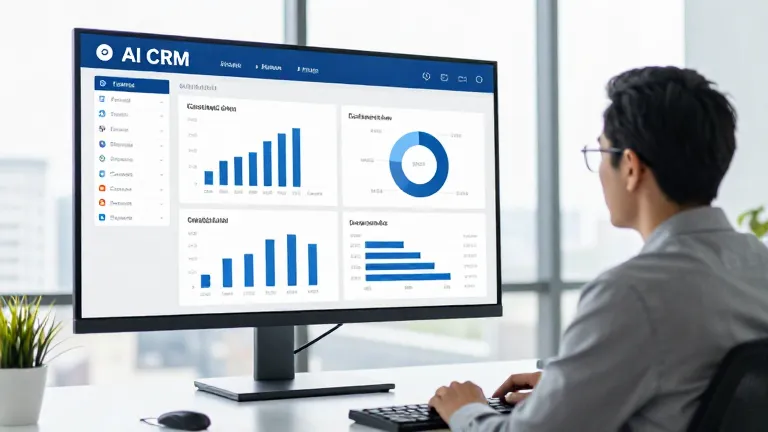
Data analysis and customer insights are essential for making informed decisions and improving customer relationships. AI CRM tools should provide actionable reports, predictive analytics, and real-time dashboards that highlight trends and opportunities. These insights help businesses tailor their strategies, anticipate customer needs, and deliver more relevant interactions. Prioritize tools that offer robust data visualization and integration with analytics platforms.
How to Choose the Right AI CRM Tool for Your Business
Selecting the right AI CRM tool requires a careful balance between functionality and cost. Understanding your business's unique requirements and financial constraints is essential to ensure that the chosen solution aligns with your goals and provides long-term value.
- Assess your business needs and team size before selecting a CRM tool.
- Compare pricing models and scalability options across different platforms.
- Test the tool with a free demo or trial to evaluate its performance.
Evaluating Your Business Needs
Evaluating your business needs involves identifying specific CRM functions that are most critical to your operations. Consider whether your primary focus is on sales automation, customer engagement, or data analysis. Also, think about the size of your team and the volume of interactions you handle daily. This will help you prioritize features that offer the most value for your business.
Cost Considerations for AI CRM Tools
Cost considerations should not be overlooked when choosing an AI CRM tool. While some platforms offer affordable monthly subscriptions, others may require significant upfront investment or have hidden fees. Look for pricing models that scale with your business growth, such as tiered plans or pay-as-you-go options. It's also important to factor in the cost of training and integration with existing systems.
Real-World Applications of AI in Customer Relationship Management
Real-world applications of AI in customer relationship management demonstrate the transformative potential of these tools across various industries. From enhancing sales processes to improving customer service, AI-driven CRM solutions are reshaping how businesses interact with their clients, driving growth and satisfaction.

Case Studies: AI CRM in Action
In the retail sector, AI CRM tools are used to analyze customer behavior and preferences, enabling personalized recommendations and targeted promotions. For instance, a major e-commerce company implemented an AI-powered CRM system that tracked customer interactions across multiple channels, allowing it to deliver hyper-personalized offers that increased conversion rates by 25%.
Impact on Customer Satisfaction and Retention
The impact of AI on customer satisfaction and retention is significant. By providing faster, more accurate responses, AI CRM tools help businesses meet customer expectations and resolve issues before they escalate. A telecommunications firm reported a 30% improvement in customer satisfaction after deploying an AI chatbot for 24/7 support, coupled with predictive analytics to anticipate service issues.
Frequently Asked Questions
How does AI improve customer retention in CRM?
AI improves customer retention by analyzing customer behavior and preferences to deliver personalized experiences. It enables proactive engagement through predictive analytics, helping businesses anticipate needs and resolve issues before they arise.
Are AI CRM tools suitable for small businesses?
AI CRM tools can be suitable for small businesses, offering scalable solutions that enhance efficiency and customer insights. Many platforms provide flexible pricing models, making advanced CRM capabilities accessible even with limited resources.
What are the key differences between AI and traditional CRM tools?
AI CRM tools leverage machine learning and data analysis to provide predictive insights and automate tasks, while traditional CRM tools focus on data storage and basic automation. AI tools offer more dynamic and personalized customer interactions.
How can I integrate AI CRM tools with my existing business software?
Most AI CRM tools offer APIs and integration options that allow seamless connection with existing systems like email platforms, accounting software, and marketing tools. Consulting the vendor's support documentation or working with a developer can help ensure a smooth integration process.
Next Steps in AI CRM Adoption
AI-powered CRM tools are transforming how businesses manage customer relationships by offering advanced automation, data-driven insights, and personalized engagement. Choosing the right tool depends on your business needs, budget, and integration capabilities.
To get started, evaluate your CRM requirements, explore AI tools that align with your goals, and consider how they can enhance your current workflows. Implementing AI in CRM can lead to better customer satisfaction, improved retention, and increased operational efficiency.